
Introduction: The Rise of Fractional Real Estate Investing in India
Fractional real estate investing lets you own a share of premium property — without spending crores. By pooling ₹10–₹25 lakh, you can co-own commercial spaces like offices or warehouses and earn steady rental income.
As real estate prices skyrocket in cities like Bengaluru and Mumbai, smart investors and NRIs are turning to this model for predictable returns, low entry barriers, and tech-driven transparency.
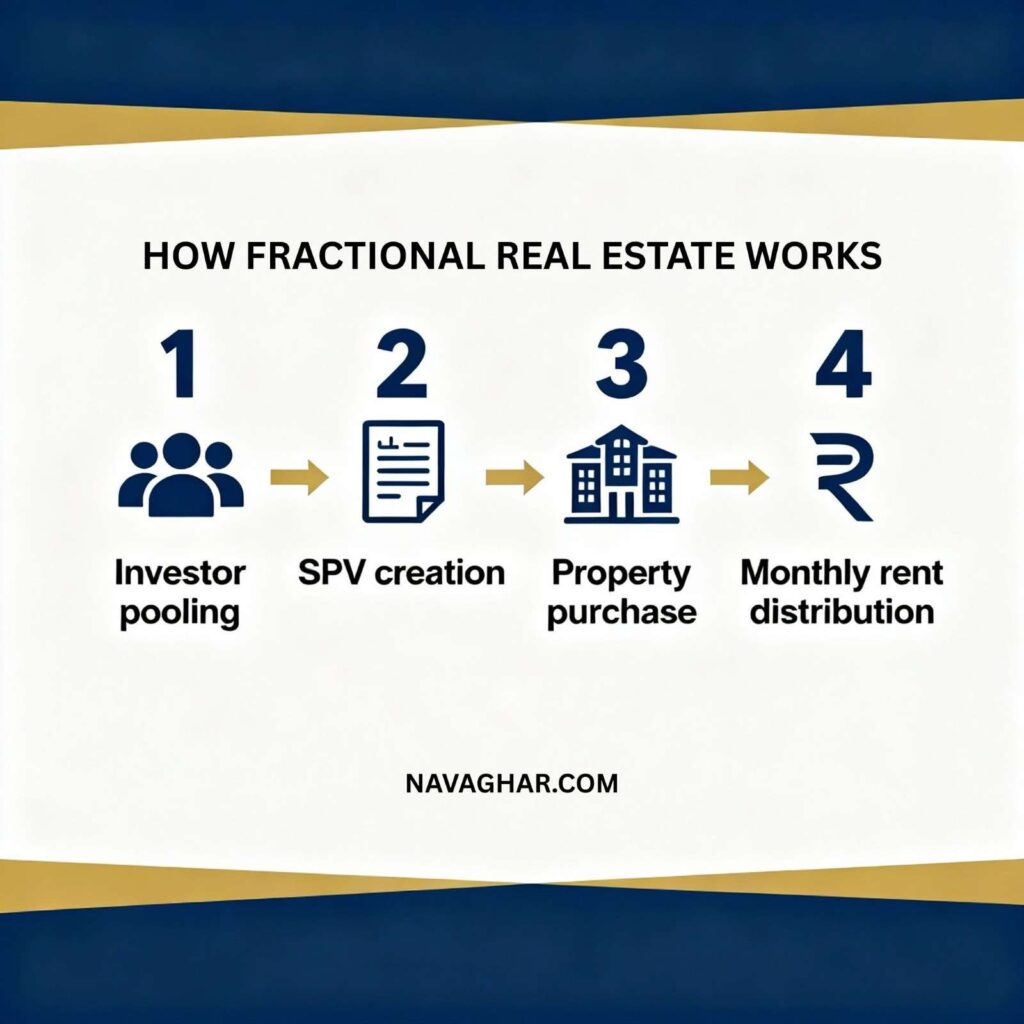
What is Fractional Ownership and How It Lets You Buy ₹10–₹25 Lakh Shares of Premium Property?
Fractional ownership lets several investors buy and co-own a premium property together. Instead of one person owning it all, each investor holds a fraction — or share — of the asset. A Special Purpose Vehicle (SPV) legally owns and manages the property. Each investor becomes a shareholder in that SPV and earns rental income and appreciation based on their ownership share.
Step-by-Step Breakdown:
- Choose a Platform: Investors select a registered PropTech platform (like Strata, hBits, or MYRE).
- Select a Property: Usually Grade-A commercial properties with reliable tenants.
- Invest Funds: The platform divides the property’s value into smaller investment slots of ₹10–₹25 lakh.
- Earn Returns: Investors receive rental payouts every month or quarter.
- Exit Option: After 3–5 years or via resale on the platform (limited liquidity).
Read a Detailed blog on: The Rise of PropTech in India’s Rental Market.
Example:
| City | Land Price (2020) | Land Price (2025) | ROI (5 Years) | Key Growth Driver |
|---|---|---|---|---|
| Nagpur | ₹10 lakh/acre | ₹22 lakh/acre | 120% | MIHAN, Metro, IT Park |
| Indore | ₹15 lakh/acre | ₹28 lakh/acre | 86% | Smart City Mission |
| Surat | ₹18 lakh/acre | ₹35 lakh/acre | 94% | Diamond Bourse, Metro |
Fractional Real Estate vs REITs — The Smarter Move for Investors
REITs are proven and regulated — but fractional real estate investing gives you real ownership. You don’t just invest; you actually own a share of the property and earn from its income directly. Here’s how they compare:
| Feature | Fractional Real Estate | REITs |
|---|---|---|
| Investment Type | Direct co-ownership via SPV | Indirect ownership through listed units |
| Minimum Ticket Size | ₹10–₹25 lakh | ₹100–₹500 |
| Liquidity | Low (lock-in period 3–5 years) | High (listed on NSE/BSE) |
| Return Potential | 8–10% rental + capital gain | 6–8% dividend yield |
| Regulation | Semi-regulated (SEBI under proposal) | Fully regulated by SEBI |
Key Takeaway: If REITs are like mutual funds for real estate, fractional ownership is like buying your favorite property share-by-share.
India's New Real Estate Trend Isn't REITs — It's Fractional Investing (Here's Why It's Exploding)
Several factors are driving the rise of fractional real estate investing in India:
1. Rising Property Prices
With urban real estate costs hitting all-time highs, fractional investing provides an affordable entry to premium assets.
2. Investor Awareness & Tech Platforms
PropTech companies are simplifying ownership with transparent dashboards, rent tracking, and property documents — making investing easier than ever.
3. Passive Income and Portfolio Diversification
Investors earn steady rental yields (8–10%) while diversifying beyond traditional assets like gold or stocks.
Read a Detailed blog on: Best Cities in India for Rental Yield.
4. Global Trend Alignment
Globally, markets in the US and Singapore have already embraced fractional property ownership. India is now catching up, especially with SEBI considering regulation under the MSM REIT model.
Read a Detailed blog on: Compare top-performing REITs in India
Real Returns: How Much Can You Actually Earn from Fractional Real Estate?
Fractional real estate investing has proven to be a steady income generator for investors seeking passive returns from commercial spaces. Typical properties leased to blue-chip tenants (like banks, IT companies, or logistics firms) generate rental yields of 8–10% per year, plus capital appreciation of 5–7% annually over the long term.
ROI Comparison (3-Year Projection)
| Investment Type | Amount | Annual Yield | 3-Year Total Return |
|---|---|---|---|
| Fractional Real Estate | ₹10,00,000 | 9% | ₹2,70,000 + appreciation |
| REITs | ₹10,00,000 | 7% | ₹2,10,000 |
| Fixed Deposit | ₹10,00,000 | 6% | ₹1,80,000 |
Before You Invest in Fractional Real Estate, Understand These Legal and Tax Basics
Currently, fractional real estate investments in India are legal when structured via Special Purpose Vehicles (SPVs) — usually private limited companies that hold property titles. Investors buy equity shares in the SPV, which gives them proportional rights to rent and sale proceeds.
However, SEBI is now drafting regulations under the Micro, Small, and Medium REIT (MSM REIT) framework to bring these platforms under official supervision. Once implemented, investors can expect:
- Greater transparency
- Mandatory audits and disclosures
- Improved liquidity options
Tax Implications
- Rental income → Taxed as Income from House Property after standard deductions.
- Capital gains → Taxed as Short-Term (<24 months) or Long-Term (>24 months).
- Stamp duty & registration fees apply during SPV creation.
Top Fractional Real Estate Platforms in India (2025 Update)
| Platform | Minimum Investment | Property Type | Avg. Returns | Exit Lock-in | Key Feature |
|---|---|---|---|---|---|
| Strata | ₹25 lakh | Grade-A Offices | 9–10% | 3–5 years | High transparency dashboard |
| hBits | ₹10 lakh | Commercial | 8–9% | 3 years | Data-driven property screening |
| MYRE | ₹15 lakh | Retail/Office | 9–10% | 4 years | Portfolio diversification options |
| PropertyShare | ₹25 lakh | Warehouses | 8–9% | 5 years | Institutional-grade assets |
Who Should Invest — And Who Shouldn't
Not every investor needs fractional real estate. But if you want a steady income without buying an entire property, this is built for you.
Ideal For:
- NRIs wanting a steady INR income without property management hassle
- Working professionals seeking diversification beyond mutual funds
- HNIs and family offices aiming for inflation-hedged returns
- Long-term investors are comfortable with moderate liquidity
Avoid If:
- You need funds within 1–2 years
- You prefer daily liquidity (like stocks)
- You’re risk-averse or unfamiliar with commercial real estate
FAQs
Fractional ownership platforms use an SPV structure, and SEBI will soon introduce official regulations.
Usually between ₹10 lakh to ₹25 lakh, depending on the property and platform.
REITs are listed and regulated, while fractional investments offer direct co-ownership but are less liquid.
Yes. It’s taxable as income from other sources. Capital gains apply when selling your stake.
Conclusion: The Future of Real Estate Is Fractional
Tired of high entry costs and low returns? Fractional ownership changes that. It opens doors to premium properties, steady income, and a smarter way to invest — all without crores in the bank. Smart money won’t just buy property — it’ll buy a fraction of it.