
Introduction
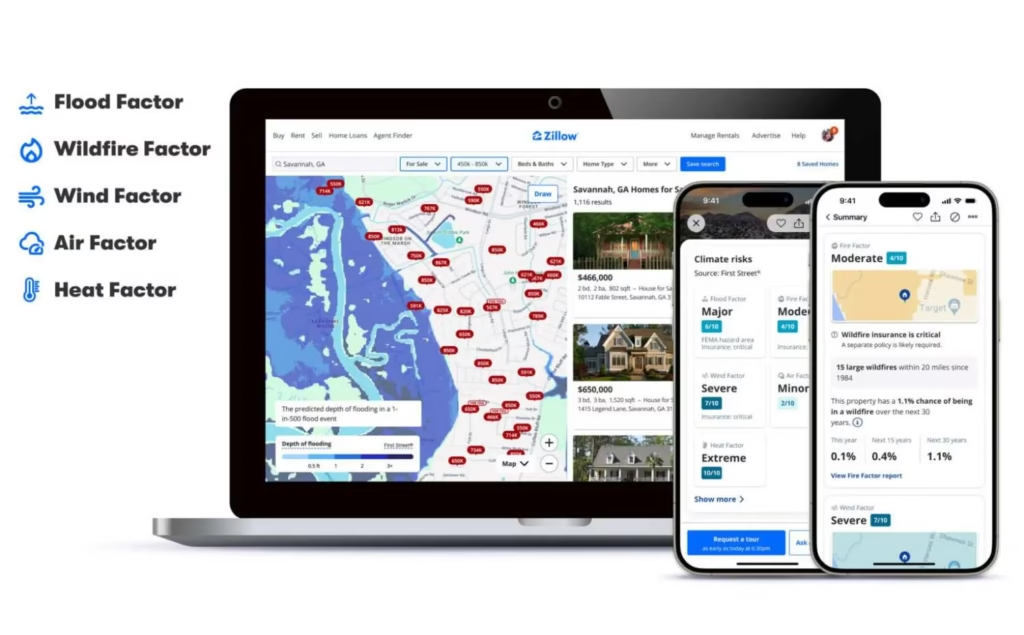
In November, Zillow stopped showing climate risk details on home listings in California. Buyers could no longer see warnings about floods, wildfires, rising sea levels, or extreme heat. The feature had only been around for a short time. The risks haven’t gone away—what changed was the market. With home prices under pressure, showing climate hazards became tricky.
Why Zillow Pulled Climate Risk Information
Zillow’s climate data relied on models from First Street Foundation, a climate risk analytics company used by several real estate platforms.
The removal followed objections from the California Regional Multiple Listing Service (CRMLS), which questioned the accuracy of First Street’s flood risk modeling. As a result, Zillow removed the feature from California listings rather than continue displaying disputed data.
The risks stayed the same, only the warnings were removed.
Flood Risk Modeling: Why the Data Doesn’t Always Match
Flood risk estimates vary depending on methodology, data freshness, and assumptions about future climate conditions.
Key differences between major flood data sources:
| Aspect | FEMA Flood Maps | First Street Flood Models |
|---|---|---|
| Update frequency | Infrequent | Regularly updated |
| Climate change included | Limited | Yes |
| Risk coverage | Conservative | Broader |
| Future projections | Minimal | Forward-looking |
FEMA maps are widely used, but many experts say they’re outdated. First Street’s models flag more homes as at risk, which is why they’re often debated.
The Market Impact of Climate Risk Disclosure
Even Zillow’s research shows that when flood risk is disclosed, home prices are impacted.
Key findings:
- Homes labeled as flood-prone tend to sell for less
- Buyers factor climate risk into long-term costs
- Insurance availability and premiums play a major role in decision-making
According to First Street, the problem wasn’t a new risk; it was new attention.
A New Plugin Is Putting Climate Risk Back in Buyers’ Hands
Neil Matouka, who previously managed California’s Fifth Climate Change Assessment, is developing a browser-based plugin designed to restore climate context to Zillow listings.
When activated, the plugin automatically displays area-level climate risk data for California properties.
The Plugin highlights:
- Wildfire exposure
- Flood risk
- Sea-level rise vulnerability
- Extreme heat trends
The data comes from publicly available state and federal sources, with transparent methodologies.
Why the Plugin Focuses on Area Risk—Not Property Predictions
Matouka’s goal is not to predict whether a specific home will flood or burn in a given year. Instead, the plugin communicates the standing environmental risks of the surrounding area.
As he explains, the goal is not perfect precision but consistent, usable information that helps buyers understand long-term exposure.
Experts agree that climate models work best for showing general risk, not exact outcomes.
Why Climate Models Often Disagree
Climate risk models differ because they:
- Use different datasets
- Make different assumptions about future warming
- Operate at different spatial and time resolutions
Chris Field, director of the Stanford Woods Institute, says the more detailed a climate model is, the less precise its predictions tend to be. That’s why it’s better to look at multiple reliable estimates instead of relying on just one.
Transparency Is the Real Climate Data Challenge
Experts agree that improving climate risk data depends less on eliminating differences between models and more on openness.
What builds trust in climate risk data:
- Publicly accessible datasets
- Clear documentation of methods
- Independent validation
California is uniquely positioned in this regard due to its extensive open-data infrastructure. Replicating similar tools in other states will be significantly more difficult.
What This Means for California Homebuyers
With Zillow’s climate data removed, buyers now face a more fragmented information landscape.
Homebuyers should:
- Seek independent climate risk tools
- Compare public and private data sources
- Consider insurance availability and future resale value
The absence of climate data on listings does not reduce exposure—it increases uncertainty.
The Bigger Shift in Real Estate Transparency
Climate risk is no longer a distant concern. It directly affects:
- Property values
- Insurance premiums
- Mortgage approvals
- Long-term livability
Real estate platforms now face a crossroads: prioritize smoother transactions or equip buyers with risk awareness.
California’s experience suggests this tension will only intensify.
FAQs
Conclusion
Zillow may have hidden climate risk data, but the threats—floods, wildfires, heat, and sea-level rise—are still real. Tools like Neil Matouka’s plugin help buyers see area-level risks and make smarter decisions. In a market where risk affects prices, staying informed is essential.