
Introduction
When comparing InvITs, REITs, and direct real estate, many investors assume one option must be clearly better than the rest. In reality, each investment works differently. Some offer steady cash flow. Others focus on long-term growth.
In today’s market—shaped by rising interest rates, inflation pressure, and changing real estate demand—the structure you choose can directly affect your returns.
This guide explains how InvITs, REITs, and direct property investments perform, so you can decide which one fits your income needs, risk comfort, and long-term goals.
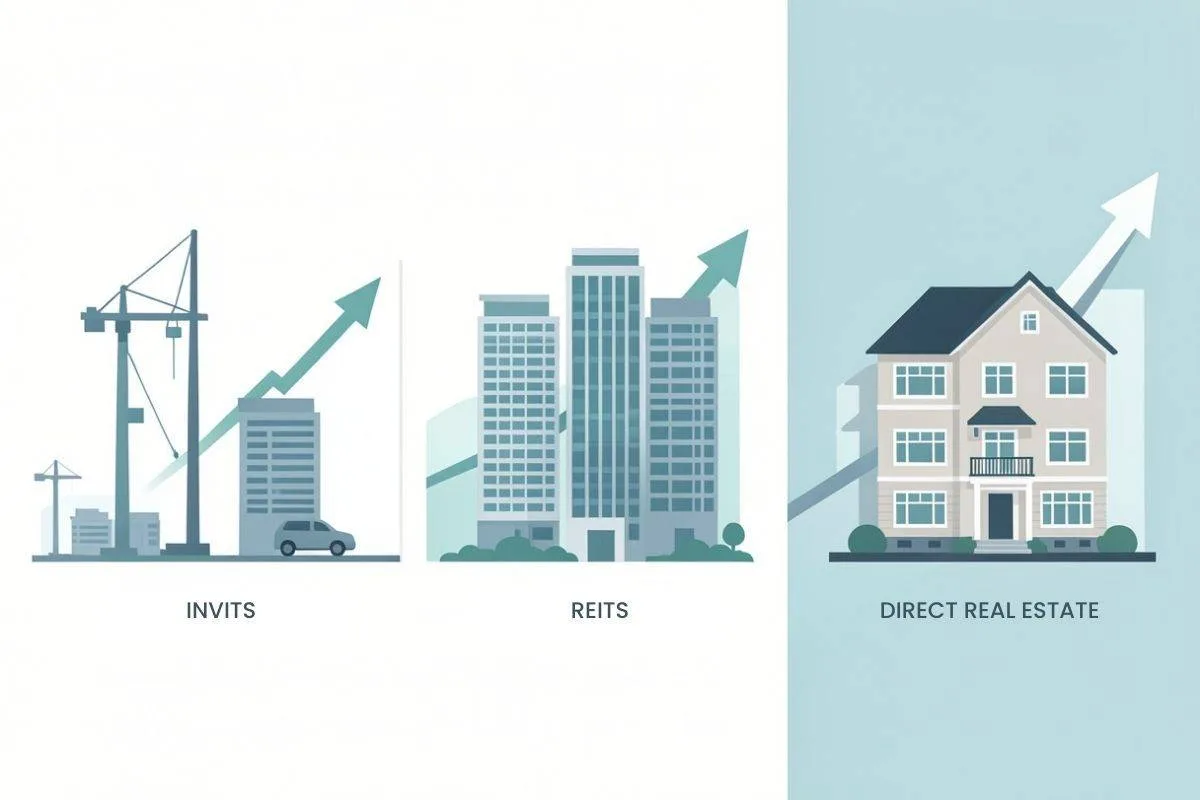
Understanding the Core Difference Between InvITs, REITs & Direct Real Estate
At a high level, all three are real-asset investments—but the source of income is completely different.
Key Differences at a Glance
| Factor | InvITs | REITs | Direct Real Estate |
|---|---|---|---|
| Asset Type | Infrastructure assets | Commercial properties | Residential or commercial property |
| Income Source | Contracted usage payments | Rental income | Rent + capital appreciation |
| Management | Professional & regulated | Professional & regulated | Self or broker-managed |
What This Means for Investors
- InvITs earn money from long-term infrastructure contracts like toll roads or power transmission lines
- REITs depend on tenant occupancy and lease renewals
- Direct real estate depends on tenants, location demand, and owner involvement
This structural difference explains why returns, risks, and effort levels vary so widely.
Best INVITs in India
Cash Flow Predictability: Where Your Monthly Income Really Comes From
Cash flow predictability is one of the most ignored yet critical factors in this debate.
How Cash Flows Compare
- InvITs
- Revenue backed by long-term contracts
- Often inflation-linked or availability-based
- Lower volatility in distributions
- REITs
- Rental income depends on occupancy rates
- Vulnerable to economic slowdowns
- Lease renegotiations affect income
- Direct Real Estate
- Rent is not guaranteed
- Vacancies, defaults, and repairs reduce income
- Cash flow varies widely by location
Cash Flow Stability Ladder
Most stable → Least stable
- InvITs
- REITs
- Direct real estate
For income-focused investors, this difference alone can outweigh headline return numbers.
Inflation Impact: Which Investment Protects Your Purchasing Power?
When inflation rises, InvITs behave very differently from REITs and physical property.
Inflation Sensitivity Comparison
| Investment | Inflation Impact | Why It Happens |
|---|---|---|
| InvITs | Positive to neutral | Tariff escalation clauses and regulated pricing models |
| REITs | Moderate | Rental reset lag and lease renegotiation cycles |
| Direct Real Estate | Location-driven | Local demand, affordability, and supply dynamics |
Key Takeaways
- Many InvIT revenues rise with inflation, protecting real returns
- REIT rentals adjust slowly, creating a time lag
- Direct property works as an inflation hedge only in high-demand locations
When inflation stays high, predictable income beats hopeful appreciation.
Liquidity vs Exit Risk: The Myth Most Investors Miss
Liquidity is often oversold in this comparison.
The Reality of Exiting
- InvITs & REITs
- Traded on exchanges
- Easy to sell—but prices fluctuate
- Liquidity does not guarantee profits
- Direct Real Estate
- Illiquid by nature
- Time-consuming sales process
- Legal, pricing, and negotiation risks
Hidden Insight
Liquidity reduces exit time, not exit risk. Investors with short-term capital needs generally benefit more from market-linked liquidity than from the slower exit cycles of physical real estate.
Risk Breakdown: It’s Not One Risk—It’s Many
Most comparisons label InvITs, REITs, and direct real estate as low, medium, or high risk. That oversimplification hides what actually matters: the type of risk you are exposed to.
Risk Comparison Table
| Risk Type | InvITs | REITs | Direct Real Estate |
|---|---|---|---|
| Revenue risk | Low | Medium | High |
| Regulatory risk | Medium | Low | Low |
| Interest rate risk | High | Medium | Medium |
| Asset concentration | Medium | Medium | High |
| Operational risk | Low | Low | High |
What This Means in Practice
- InvITs face policy and interest rate sensitivity, but benefit from contracted revenues
- REITs are most exposed to economic cycles and leasing demand
- Direct real estate concentrates risk in a single asset, tenant, and location
Understanding which risk you can tolerate matters more than chasing higher returns.
Debt & Leverage: The Silent Return Multiplier (or Destroyer)
Leverage boosts returns in good times, but it also makes losses during downturns.
How Leverage Differs Across Investments
| Factor | InvITs | REITs | Direct Real Estate |
|---|---|---|---|
| Debt Regulation | Strict & transparent | Moderately regulated | Personal liability |
| Interest Rate Exposure | High | Medium | Medium |
| Refinancing Risk | Moderate | Moderate | High |
Investor Reality Check
- InvIT leverage is regulated, reducing default risk but increasing rate sensitivity
- REITs refinance periodically, which can pressure distributions when rates rise
- Direct property loans are tied to your personal balance sheet
In rising-rate environments, controlled leverage often beats aggressive borrowing.
Yield vs Wealth Creation: Why High Yield Isn’t Always Better
Many investors confuse yield with returns—but they are not the same.
Yield vs Return
| Investment Type | Yield Focus | Price Growth | Wealth Creation Style |
|---|---|---|---|
| InvITs | High | Low | Income-driven |
| REITs | Moderate | Moderate | Balanced |
| Direct Real Estate | Low initially | High | Growth-driven |
How to Interpret This
- InvITs prioritize steady cash distributions
- REITs balance income with asset appreciation
- Direct real estate builds wealth through appreciation, leverage, and time
If your goal is monthly income, yield matters.
If your goal is long-term net worth, total return matters more.
Final Verdict: Which One Actually Wins?
There is no universal winner in the debate over InvITs vs REITs vs Direct Real Estate.
- Choose InvITs if income stability matters more than price appreciation
- Choose REITs if you want diversification with moderate growth
- Choose direct real estate if you want control, leverage, and long-term capital gains
The “best” investment is the one that matches how you earn, how long you invest, and how much risk you can sleep with.
FAQs
Are InvITs safer than REITs?
InvITs generally offer more predictable cash flows due to long-term infrastructure contracts, while REITs depend on tenant occupancy and lease renewals. However, InvITs are more sensitive to interest rate changes.
Do InvITs provide monthly income?
Most InvITs distribute income quarterly or semi-annually. While the income is relatively stable, monthly payouts are not guaranteed.
Can InvITs replace rental income?
InvITs can replace rental income for investors seeking passive, hassle-free cash flow, but they lack the capital appreciation potential of physical property ownership.
Which has higher long-term returns: REITs or direct real estate?
Direct real estate typically delivers higher long-term returns due to appreciation and leverage, while REITs offer more stable, diversified returns with better liquidity.
Are InvITs affected by interest rate hikes?
Yes. Rising interest rates can reduce InvIT prices and distributions due to higher borrowing costs and competition from fixed-income investments.