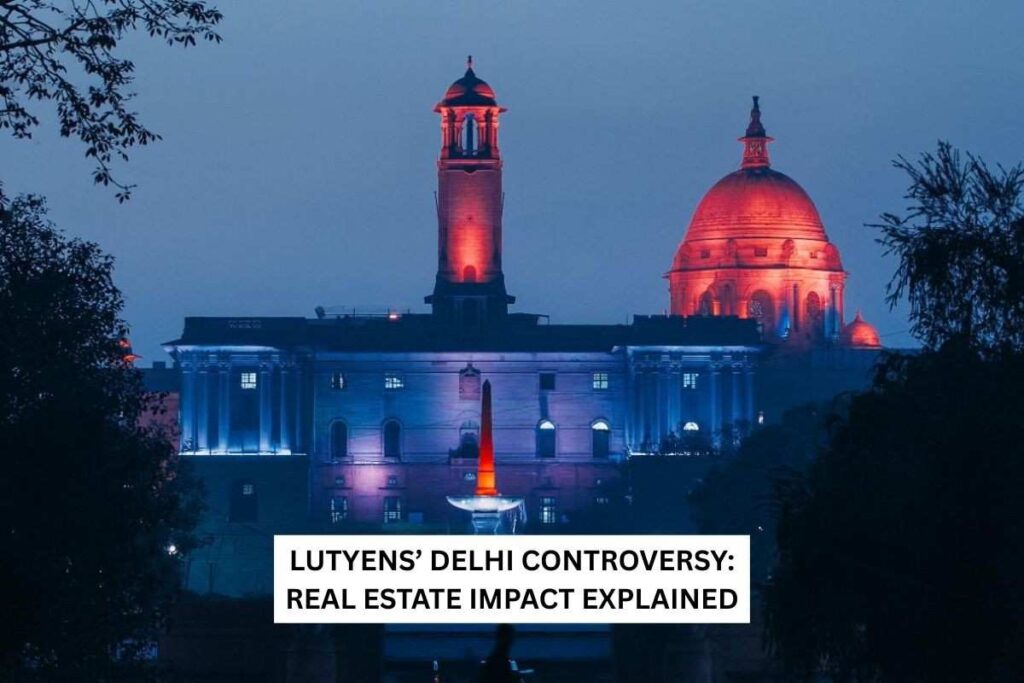
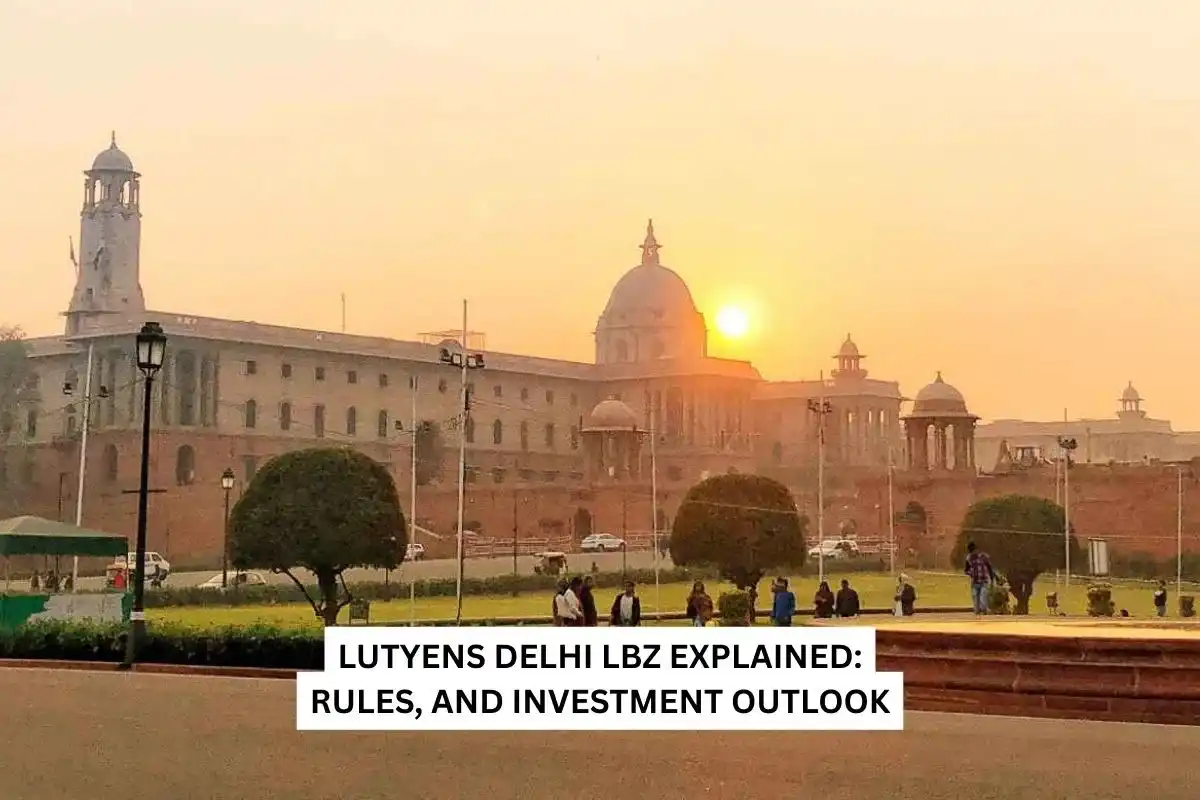
Lutyens Delhi property prices are among the highest in India. The premium reflects political influence, colonial heritage, extreme land scarcity, and strong demand from ultra-high-net-worth buyers.
Located in central New Delhi, within the NDMC jurisdiction, the Lutyens Bungalow Zone (LBZ) is considered the country’s most exclusive residential address.
Unlike other luxury markets dominated by high-rise towers, LBZ is a low-density bungalow district with strict zoning rules. Redevelopment is limited, new supply is almost impossible to find, and most transactions occur privately.
This guide explains the zoning regulations, plot size norms, leasehold structure, off-market deals, and how LBZ compares with Mumbai’s Malabar Hill. You will understand why this micro-market operates differently from anywhere else in India.
What Exactly Is the Lutyens Bungalow Zone (LBZ)?
The Lutyens Bungalow Zone is a heritage residential district designed by Sir Edwin Lutyens during the British era. It forms the elite belt of Central Delhi and sits within NDMC limits.
Geographic Boundaries Include:
- Prithviraj Road
- Dr APJ Abdul Kalam Road (Aurangzeb Road)
- Amrita Shergill Marg
- Safdarjung Road
- Teen Murti Marg
Key Characteristics:
- Low-density bungalow estates
- Large green cover and tree-lined avenues
- Strict architectural control
- Proximity to Rashtrapati Bhavan and India Gate
The Lutyens Bungalow Zone should not be confused with Central Vista. Central Vista is the administrative core of India, whereas LBZ is a low-density residential enclave.
Estimated Number of Bungalows: 1,000+ properties
Authority: NDMC + Land & Development Office (L&DO)
LBZ Zoning Rules & Redevelopment Restrictions Explained
One reason Lutyens Delhi property prices remain high is due to rigid zoning regulations that limit supply expansion.
Core Restrictions:
- No subdivision of original plots
- Strict Floor Area Ratio (FAR) control
- Height restrictions
- Mandatory green cover preservation
- Demolition requires multiple approvals
Redevelopment Reality:
While interior renovations are allowed, structural reconstruction is tightly monitored by heritage committees. Owners must comply with:
- Architectural control norms
- Tree preservation guidelines
- Security compliance
| Regulation Type | Impact on Supply |
|---|---|
| No Plot Subdivision | Prevents densification |
| Height Restriction | No vertical growth |
| FAR Limits | Controlled built-up area |
| Heritage Tag | Approval-heavy redevelopment |
These rules ensure land scarcity, directly influencing capital appreciation and asset value.
Returns Comparison: Yield vs Total Return Reality
Why Dividend Yield Alone Is Misleading
Dividend yield alone does not reflect true REIT performance, as Indian REIT returns are shaped by rental income growth, stable occupancy, and asset revaluation, while global REIT returns depend on property appreciation, dividend growth, and currency movements.
Return drivers at a glance
- Indian REITs: rental growth, occupancy levels, asset revaluation
- Global REITs: property appreciation, dividend growth, currency impact
The 1-Acre Plot Rule – Myth vs Reality
Many LBZ plots were originally one acre. Today, not all properties meet that exact standard.
Why Large Plots Exist:
- Colonial master planning principles
- Garden-city concept
- Security buffer design
Why Subdivision Is Rare:
- Official non-subdivision policy
- Title complications
- Heritage oversight
Typical Plot Features:
- Extensive lawns
- Independent access
- Perimeter security
| Factor | LBZ Plot Size |
|---|---|
| Average Range | 0.5 – 2 acres |
| Density | Extremely low |
| Subdivision Allowed | No |
This low-density model preserves exclusivity and keeps inventory limited.
Top 10 Posh Areas in Delhi to Live in
LBZ vs Central Vista – Key Differences
Many confuse Lutyens’ Delhi with Central Vista, but they serve entirely different functions.
Central Vista:
- Parliament House
- Secretariat
- Government administrative buildings
- Fully state-controlled
Lutyens Bungalow Zone:
- Residential estates
- Mix of private owners and leaseholders
- Ultra-high-net-worth individuals
| Feature | LBZ | Central Vista |
|---|---|---|
| Usage | Residential | Administrative |
| Ownership | Private + Leasehold | Government |
| Redevelopment | Restricted | State-led |
This difference helps clarify why LBZ allows private ownership and transactions, whereas Central Vista is entirely government-controlled.
Why Inventory Rarely Hits the Open Market
Unlike other luxury zones, you rarely see LBZ properties listed on portals.
Reasons:
- Privacy of ultra-HNIs
- Political sensitivity
- Security clearance concerns
- Reputation management
How Deals Typically Happen:
- Closed-network brokers
- Confidential mandates
- Political or corporate referrals
- Direct negotiations
As a result, LBZ operates through a private deal network where:
- Pricing is negotiated privately
- Listings are discreet
- Buyers are pre-qualified
Such opacity reinforces LBZ’s status as a “trophy asset” market rather than a transactional housing segment.
Government Leasehold vs Freehold Dynamics
Ownership structure plays a crucial role in Lutyens Delhi property prices.
Leasehold Model:
- Governed by Land & Development Office (L&DO)
- Often, a 99-year lease structure
- Transfer approvals required
Freehold Cases:
- Limited availability
- Clear title premium
| Ownership Type | Control Authority | Transfer Ease |
|---|---|---|
| Leasehold | L&DO | Moderate complexity |
| Freehold | Private | Relatively easier |
Important Processes:
- Mutation approval
- Conveyance deed compliance
- Title clearance verification
These factors influence transaction timelines and risk assessment.
Price Analysis & Comparison: LBZ vs Mumbai’s Malabar Hill
LBZ is often compared to Mumbai’s Malabar Hill, another elite address.
Estimated Pricing:
- LBZ: ₹150–300+ crore per acre (varies by road)
- Malabar Hill: ₹1.5–2 lakh+ per sq ft (luxury towers & bungalows)
Density Comparison:
- LBZ: Horizontal bungalow estates
- Malabar Hill: Vertical luxury towers + limited bungalows
| Factor | Lutyens Delhi | Malabar Hill |
|---|---|---|
| Density | Very low | Moderate |
| Development Type | Bungalows | High-rise + villas |
| Supply | Fixed | Limited vertical growth |
| Buyer Profile | Political + Industrial | Corporate + Celebrity |
LBZ commands higher per-acre pricing due to land size and scarcity, whereas Malabar Hill maximizes vertical value.
10-Year Appreciation & Investment Outlook
Lutyens’ Delhi functions as a land banking market rather than a rental-yield play.
Key Investment Drivers:
- Fixed supply
- Heritage protection
- Political power proximity
- Generational wealth storage
Risk Factors:
- Policy shifts
- Leasehold complications
- Regulatory tightening
| Metric | LBZ Outlook |
|---|---|
| Capital Appreciation | Strong long-term |
| Rental Yield | Low |
| Liquidity | Limited but high-ticket |
| Buyer Type | Ultra-HNI |
It is a legacy holding, not a trading asset.
FAQs
What is the minimum plot size in Lutyens’ Delhi?
Most original plots were close to 1 acre, but sizes ranged from 0.5 to 2 acres. Subdivision is generally not permitted.
Can anyone buy property in Lutyens’ Bungalow Zone?
Legally, yes, but practically, transactions are limited to ultra-HNIs due to high pricing and closed-network deals.
Why is Lutyens’ Delhi so expensive?
Scarcity, zoning restrictions, political proximity, heritage protection, and ultra-low density drive premium pricing.
Is LBZ leasehold or freehold?
Many properties operate under leasehold governed by L&DO, though some freehold cases exist.
Which is more expensive, Lutyens Delhi or Malabar Hill?
On a per-acre basis, LBZ is typically more expensive due to land size and strict supply constraints.